
For overseas machinery exporters—especially those from Germany and Japan, key global suppliers of machinery—achieving cost-effective market entry into China hinges on mastering China’s regulatory framework and leveraging the specialized services of Guangzhou Nansha Port tailored for machinery shipments. Precision bearings, critical components in industrial machinery, require meticulous handling to meet China’s stringent import standards, from documentation to customs clearance. With Guangzhou Nansha Port’s dedicated support for machinery exports, exporters can minimize delays and boost their competitiveness in the Chinese market.
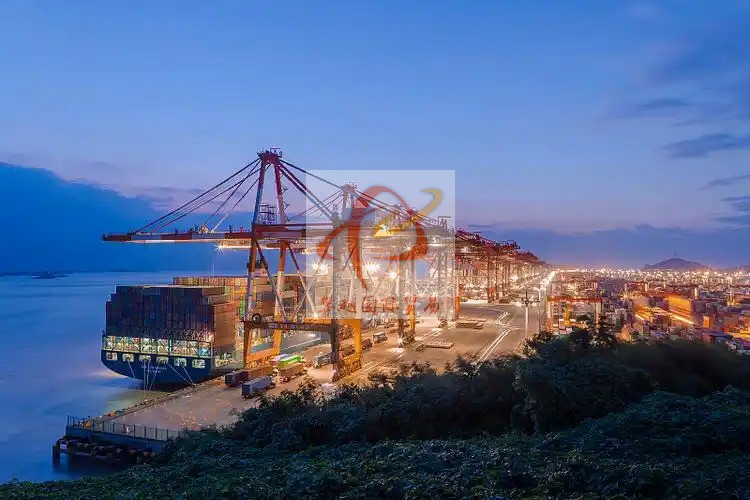
Case: Avoidable Clearance Delays at Nansha Port
A German machinery exporter once encountered avoidable clearance delays at Guangzhou Nansha Port due to an incorrectly translated “material composition” section on their commercial invoice and an unauthenticated Certificate of Origin (COO). This oversight extended the clearance process by several days, forcing the exporter to pay demurrage fees and miss a key client’s order deadline. This incident highlighted the necessity of source-specific documentation expertise and early port coordination, a factor modern exporters can’t afford to overlook.
Nansha Port’s Dedicated Services for Machinery Exports
Guangzhou Nansha Port addresses these challenges with a suite of dedicated services for machinery exports: a “Precision Components Green Lane” that prioritizes high-value, time-sensitive shipments of industrial machinery; one-stop document pre-audit services to catch discrepancies like translation errors or missing signatures in advance; and dedicated customs liaison officers familiar with German and Japanese export practices, available 24/7 for urgent inquiries. Each service is crafted to minimize friction, ensuring cost-effective and timely delivery to China’s machinery market.
Exporting precision bearings from Germany and Japan to China via Guangzhou Nansha Port demands more than just quality products; it requires China-aligned documentation and strategic collaboration with port authorities. By adhering to China’s 3C Certification and COO requirements and proactively coordinating with ports, German and Japanese exporters can transform potential clearance bottlenecks into streamlined steps toward market success.
Document Preparation: China-Compliant Paperwork for German and Japanese Exporters
To achieve cost-effective export of precision bearings (a type of machinery) to China from Germany and Japan via Guangzhou Nansha Port, exporters must prepare a comprehensive set of China-compliant documents. These include foundational paperwork, specialized certificates, and bilingual translations, all in line with China’s General Administration of Customs (GAC) regulations for machinery imports.
- The Certificate of Origin (COO) is a foundational document issued by local authorities—such as Germany’s Chambers of Commerce or Japan’s Ministry of Economy, Trade and Industry. German exporters must authenticate the COO with the Chinese Embassy in Berlin for official Chinese use, while Japanese exporters can complete validation via the Chinese Consulate in Tokyo. This document is crucial for proving product origin, directly impacting eligibility for preferential tariffs under China’s free trade agreements, a key element in maintaining the cost-effectiveness of machinery exports.
- The 3C Certification Certificate is mandatory for most machinery entering China, issued by China-authorized certification bodies. German and Japanese exporters must ensure technical specifications (e.g., load capacity, precision tolerance) align with China’s relevant industry safety standards and provide bilingual English-Chinese product descriptions and test reports for customs clarity. Without valid 3C Certification, shipments will be rejected at Guangzhou Nansha Port, as it’s a non-negotiable safety requirement for machinery products, risking delays and additional costs.
- For Japanese machinery exporters, the commercial invoice and packing list are equally vital as the COO and 3C Certification. These documents must include detailed descriptions of precision bearing models, serial numbers, and gross/net weights, with all figures and terms in both English and Chinese to avoid customs disputes.
- The Commercial Invoice is a legal record of the transaction, listing product quantity, unit price, total value, and payment terms. German and Japanese exporters must ensure the invoice amount matches the COO and 3C Certification and that all values are declared in USD (or CNY if using local currency). Incomplete or inconsistent invoices can trigger customs audits, leading to avoidable delays.
- The Packing List is a detailed document specifying the number of packages, dimensions, and packing types (e.g., wooden crates, cartons) for the shipment. It must align with the bill of lading and commercial invoice to prevent mismatches during customs inspection. For multi-package shipments, the packing list should break down each package’s contents to facilitate efficient cargo handling at Guangzhou Nansha Port.
China Market Access Solutions: Tailored Support for Machinery Exporters
Beyond preparing compliant documents, German and Japanese machinery exporters need specialized support to navigate Guangzhou Nansha Port’s clearance process and China’s evolving regulatory landscape—our end-to-end solutions address these core pain points.
- Source-Specific Document Audit is a free service for German and Japanese exporters, covering comprehensive reviews of COO, 3C Certification, commercial invoice, packing list, and bill of lading. Our team checks for document authenticity, translation accuracy, and alignment with China’s latest machinery import policies, including updates to 3C Certification requirements and Guangzhou Nansha Port’s clearance procedures. A detailed feedback report is delivered within the agreed time frame, highlighting discrepancies before shipment, thus eliminating last-minute delays.
- Port Coordination leverages our direct relationships with port authorities to activate the “Precision Components Green Lane.” We arrange pre-shipment document reviews, coordinate priority cargo handling, and assign a dedicated port liaison to address urgent issues—such as document corrections or cargo inspection requests. For German and Japanese exporters, this means faster unloading, reduced inspection times, and a smoother clearance process, directly supporting cost-effective market entry.
- Regulatory Updates provide tailored alerts for German and Japanese exporters on changes to China’s machinery policies—including updates to the list of 3C-certified products, energy efficiency label requirements, and Guangzhou Nansha Port’s temporary clearance restrictions. Alerts are delivered via email or our client portal, ensuring exporters stay ahead of regulatory changes and avoid compliance gaps that could disrupt their China business.
Our solutions effectively reduce document-related delays for German and Japanese machinery exporters, streamline Guangzhou Nansha Port clearance processes, and deliver a high first-pass clearance success rate for first-time China exporters. By combining document expertise with port collaboration, we eliminate the complexity of China market entry, making cost-effective precision bearing exports achievable for businesses of all sizes.
Conclusion: Your Partner for Efficient China Market Entry
For German and Japanese machinery exporters targeting China, efficient, cost-effective market entry relies on two core pillars: source-specific, China-compliant documentation and strategic use of Guangzhou Nansha Port’s dedicated services. By mastering the nuances of China’s machinery import regulations—such as 3C Certification and COO requirements—and leveraging the port’s Green Lane, exporters can transform potential clearance challenges into opportunities for growth.
As a trusted partner for precision bearing export to China, we specialize in supporting German and Japanese exporters with end-to-end solutions. From document preparation guidance and pre-shipment audits to port coordination and regulatory updates, we handle the complexity of cross-border trade, allowing you to focus on building relationships and scaling your business in China.
Ready to export your precision bearings to China from Germany or Japan via Guangzhou Nansha Port? Contact our team today for a free, source-specific document checklist and a personalized consultation to address your unique compliance needs. Let us help you achieve seamless, cost-effective market entry into China.
Disclaimer: This article is for general information only. Specific China regulatory requirements for machinery may vary by shipment details, product model, and source country. Overseas machinery exporters from Germany and Japan should consult our professional team for personalized guidance based on their actual shipment requirements.
 One-on-One Service
 Fast Processing Cycle
 Twenty Years of Import & Export Experience
 A Large Number of Successful Cases
 Online Consultation